From Sketch to Repeat: How Seamless Patterns Are Made
Most of my patterns don’t begin on a screen. They begin outside.
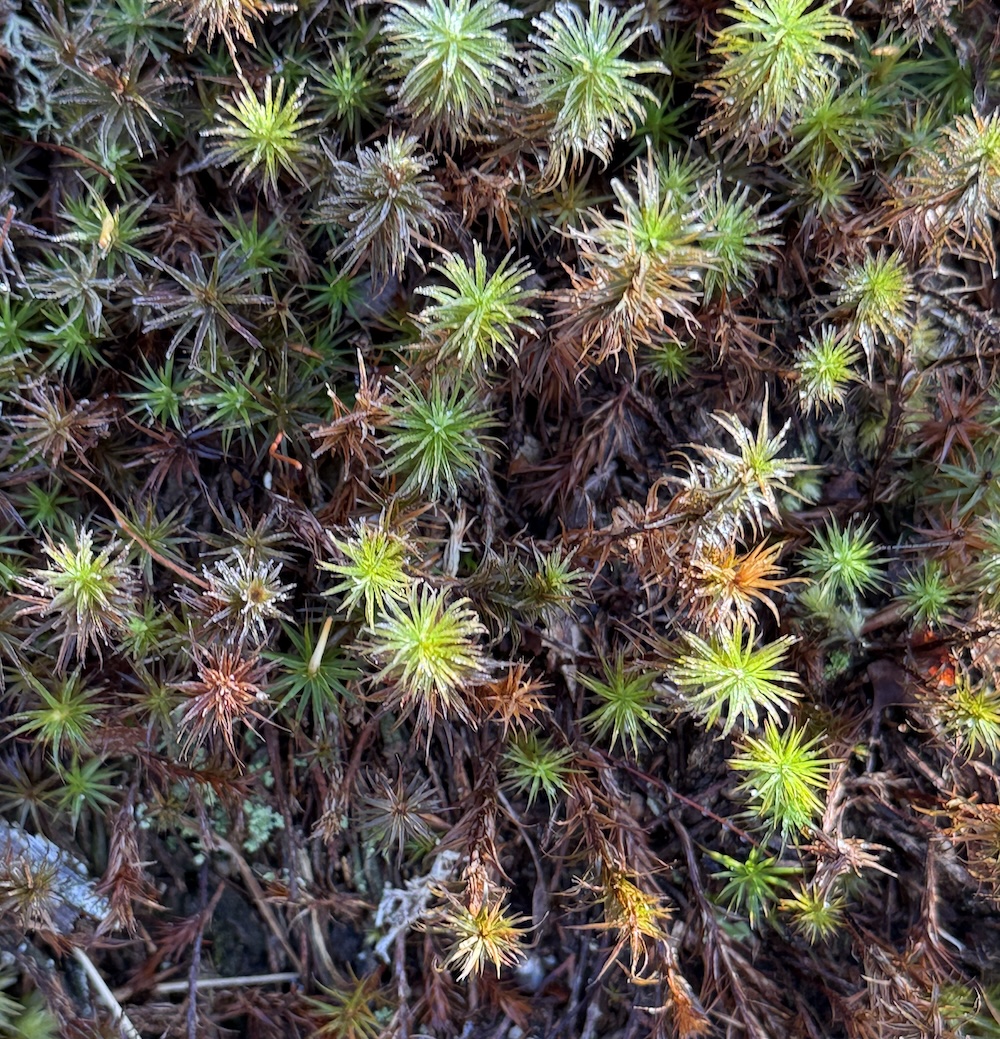
Many mornings start the same way for me. I’m on a trail with my dogs, half paying attention to where I’m stepping and half paying attention to everything else. Moss patterns on rocks. Ferns unfolding. Mushrooms pushing through damp soil after rain. Tiny textures most people walk past without noticing.
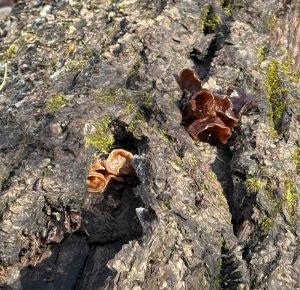
Those small observations often become the starting point for a pattern.
Sometimes I’ll take a photo. Sometimes I sketch it later from memory. Other times, the shape just sticks in my mind until it eventually ends up in a sketchbook. Before a pattern ever becomes a digital file, it usually begins as loose drawings on paper.
That part of the process feels very familiar to me because my artistic background is rooted in pyrography. For years, my work involved burning designs into wood, which meant working slowly and paying attention to natural forms. When I began exploring surface design more intentionally, I realized the same observational process translated naturally into pattern design.
The first real step in creating a seamless pattern is developing motifs. Motifs are the individual pieces that will eventually form the pattern. In my sketchbooks, these might be mushrooms, frogs, leaves, branches, moths, stones, or small botanical shapes.
Rather than drawing one perfect version, I usually sketch several variations. Some end up detailed, some very simple. This gives me a mix of elements to work with later. In pattern design, having different sizes and shapes of motifs helps create visual rhythm once everything is arranged together.
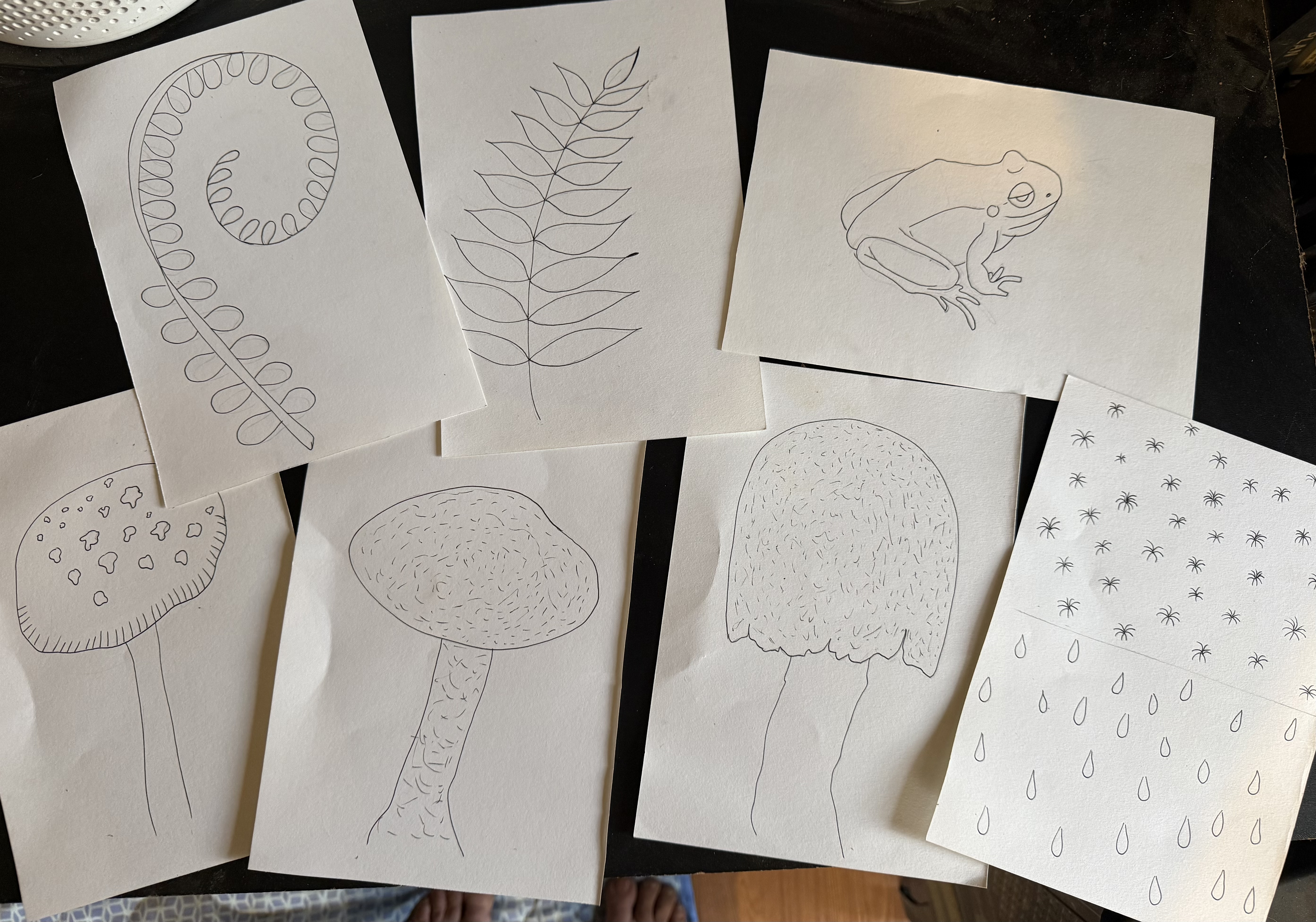
Sketching is also where experimentation happens. Lines change, shapes evolve, and sometimes completely new ideas appear while I’m drawing. It’s a quiet stage of the process where nothing needs to be perfect yet.
Once I have a group of motifs I like, I bring them into a digital workspace. For me this is often Procreate, though many surface designers use Illustrator or other tools. The goal at this stage isn’t to make the pattern yet. It’s to refine the drawings so they’re clean and ready to be arranged.
Even though the final pattern exists as a digital file, the heart of the process still comes from observation and drawing. Nature continues to be one of the most reliable sources of inspiration. The textures of bark, the structure of plants, and the shapes found in forests often translate beautifully into repeat designs.
What begins as a few sketches on paper eventually becomes a pattern capable of covering fabric, wrapping paper, packaging, and countless other surfaces.
That transformation is one of the things I love most about surface pattern design. A single idea, once structured into a repeat, can grow far beyond the page where it started.
And more often than not, the whole process still begins with something simple: a walk in the woods and a sketchbook waiting back in the studio.